Choosing a Grow Light for Indoor Plants: Three Options Compared
On this page
How we chose
We chose three lights of three different forms from three makers: a standing light, a 48 inch fixture and a set of linkable bars. Each has a maker page that gives its specifications, and every figure in the table was read from that page and logged. We have not used these lights, so we do not rate them and say nothing about how well plants grow under them. A light is only a tool for a plant that already has the right water, soil and temperature. Where a maker page leaves a figure out, the table says "not stated". The Amazon links search for the product by name, and Amazon shows its own price and stock.
The picks
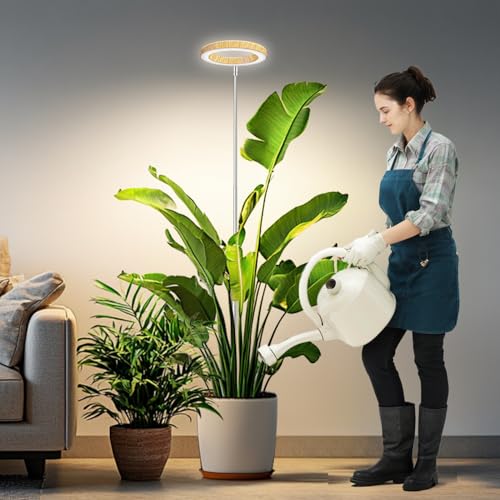
SANSI T10 Pro 55W LED Standing Grow Light
Who it suits: One or two larger plants on a floor or table where a standing lamp can lean over them. The maker states its PPFD at a set distance (20 cm), a number you can use to judge how close to hold it.
Not for: A shelf of small plants: it lights one spot, and the maker gives its PPFD at 20 cm only.
GE Grow Light for Seeds and Greens, 48 in (52 PPF)
Who it suits: A long shelf or a windowsill row of small plants or seedlings, since the fixture is 48 inches wide.
Not for: Anyone who needs to dim the light: the maker lists it as non-dimmable.
Spider Farmer GlowBar 2FT Full Spectrum LED Grow Light Strips (4 pack)
Who it suits: A multi-tier plant stand or shelving unit, where two bars light one 28 x 14 inch tier.
Not for: A single plant on a table: four bars is more than it needs.
As an Amazon Associate, Aberdeen Florist earns from qualifying purchases. Disclosure
Handy gear on Amazon
SponsoredAs an Amazon Associate, Aberdeen Florist earns from qualifying purchases. See our affiliate disclosure.
BN-LINK U47 Indoor Mini 24-Hour Mechanical Outlet Timer, 3-Prong, 2-Pack | 30-min intervals; daily repeat; easy dial setup; Indoor Timer for Christmas lights,Lamp,Fan,Fish Tank, ETL, 15A/1875W, 2 Pack
$19.99$9.02
View on Amazon (BN-LINK U47 Indoor Mini 24-Hour Mechanical Outlet Timer, 3-Prong, 2-Pack | 30-min intervals; daily repeat; easy dial setup; Indoor Timer for Christmas lights,Lamp,Fan,Fish Tank, ETL, 15A/1875W, 2 Pack)Bamworld Plant Stand with Grow Light Plant Shelf for Mutiple Pots Large Plant Holder for Living Room Patio Boho Home Decor for Gardening Warm Light
$44.99$35.98
View on Amazon (Bamworld Plant Stand with Grow Light Plant Shelf for Mutiple Pots Large Plant Holder for Living Room Patio Boho Home Decor for Gardening Warm Light)Digital Illuminance Light Meter Tester 200,000Lux Meter (18,500FC) Luxmeter Lighting Intensity Brightness Measurement Tool for Indoor Outdoor Grow Plants Film Photography lumens LED Photometer
$12.99
View on Amazon (Digital Illuminance Light Meter Tester 200,000Lux Meter (18,500FC) Luxmeter Lighting Intensity Brightness Measurement Tool for Indoor Outdoor Grow Plants Film Photography lumens LED Photometer)Light Meter Digital Illuminance Meter Handheld Ambient Temperature Measurer, Range up to 200,000 Lux, Luxmeter with 4 Digit Color LCD Screen
$29.98
View on Amazon (Light Meter Digital Illuminance Meter Handheld Ambient Temperature Measurer, Range up to 200,000 Lux, Luxmeter with 4 Digit Color LCD Screen)Kullsinss 6.3in Grow Lights for Indoor Plants, Full Spectrum Plant Light | Wood Grain Grow Lamp for Tall Plants, Auto Timer & Dimmable Setting, 10-60in Height Adjustable, Stylish Indoor Garden Decor
$17.99$14.53
View on Amazon (Kullsinss 6.3in Grow Lights for Indoor Plants, Full Spectrum Plant Light | Wood Grain Grow Lamp for Tall Plants, Auto Timer & Dimmable Setting, 10-60in Height Adjustable, Stylish Indoor Garden Decor)GHome Smart Plug, WiFi Smart Plugs that Work with Alexa and Google Home | WiFi Smart Outlet Timer Indoor Light Timers with APP Remote Control, 2.4GHz WiFi Only, No Hub Required, ETL FCC Listed, White
$29.99$24.68
View on Amazon (GHome Smart Plug, WiFi Smart Plugs that Work with Alexa and Google Home | WiFi Smart Outlet Timer Indoor Light Timers with APP Remote Control, 2.4GHz WiFi Only, No Hub Required, ETL FCC Listed, White)GooingTop Grow Light,6000K Full Spectrum Indoor Plant Growing Lamp | Desk Lamp with White Red LEDs for Indoor Plants,Clamp with Flexible Gooseneck,Brightness Adjustable,Auto Timer 4 8 12Hrs
$26.57$17.46
View on Amazon (GooingTop Grow Light,6000K Full Spectrum Indoor Plant Growing Lamp | Desk Lamp with White Red LEDs for Indoor Plants,Clamp with Flexible Gooseneck,Brightness Adjustable,Auto Timer 4 8 12Hrs)Full Spectrum Grow Lights for Indoor Plants 15-62 Inches Height Adjustable Aluminum Alloy Plant Growing Lamps with Detachable Tripod Stand, Auto On/Off Timer (Full Spectrum, Three Heads)
$29.99$23.99
View on Amazon (Full Spectrum Grow Lights for Indoor Plants 15-62 Inches Height Adjustable Aluminum Alloy Plant Growing Lamps with Detachable Tripod Stand, Auto On/Off Timer (Full Spectrum, Three Heads))Aokrean Grow Lights for Indoor Plants,Full Spectrum Plant Light with Base | 48 LEDs Halo Grow Lamp for Small Plants, Base/Soil Insert, 6.5-26in Adjustable,3 Spectra, 3/9/12H Timer, Black 3 Pack
$25.99$22.09
View on Amazon (Aokrean Grow Lights for Indoor Plants,Full Spectrum Plant Light with Base | 48 LEDs Halo Grow Lamp for Small Plants, Base/Soil Insert, 6.5-26in Adjustable,3 Spectra, 3/9/12H Timer, Black 3 Pack)LBW Grow Light with Stand for Indoor Plants, Adjustable Height up to 68", Full Spectrum Grow Light for Large & Tall Plants, Auto Timer 6/8/12/16H, 5-Level Dimmable, 3 Lighting Modes
$27.99$23.79
View on Amazon (LBW Grow Light with Stand for Indoor Plants, Adjustable Height up to 68", Full Spectrum Grow Light for Large & Tall Plants, Auto Timer 6/8/12/16H, 5-Level Dimmable, 3 Lighting Modes)





Prices and availability were accurate when retrieved from Amazon and may change. Retrieved Nov 26, 2026.
The specifications side by side
| Item | Power | Light output | Color and spectrum | Size | Form |
|---|---|---|---|---|---|
| SANSI T10 Pro 55W LED Standing Grow Light | 55 W | PPF 90 µmol/s; PPFD 195.5 µmol/m²/s at 20 cm | Full spectrum, 4000K, 168 LEDs (maker) | not stated | Standing light |
| GE Grow Light for Seeds and Greens, 48 in (52 PPF) | 30 W | 2,000 lumens; 52 PPF in the product title | Balanced red-blue (maker); CRI 90 | 48.2 x 2.8 x 2.4 in | Integrated fixture, non-dimmable, 25,000 hours rated |
| Spider Farmer GlowBar 2FT Full Spectrum LED Grow Light Strips (4 pack) | 4 bars x 20 W (80 W) | 11,680 lumens; PPE 2.2 µmol/J or better | 3000K + 5000K + 660 nm | 23 in per bar; 28 x 14 in coverage for 2 bars per tier (maker) | Linkable bars with clips, for shelves and plant stands |
The makers do not report the same figures, which is the main thing to know when you compare them. SANSI gives PPF and PPFD, the measures of the light plants can use. GE gives lumens, a measure of how bright light looks to people, and puts "52 PPF" in the product title. Spider Farmer gives lumens and PPE, which is how efficiently the light turns power into plant light. Lumens and PPF are different measures, so a lumens figure from one maker cannot be compared with a PPF figure from another. Compare lights only on figures that both makers give, and be wary of claims that cannot be compared.
Handy gear on Amazon
SponsoredAs an Amazon Associate, Aberdeen Florist earns from qualifying purchases. See our affiliate disclosure.
TiFFCOFiO Indoor Mechanical Outlet Timer, 3 Prong Timers for Electrical Outlets, 24-Hour Programmable Plug in Christmas Light Timer, ETL Listed (2 Pack)
$9.99$8.49
View on Amazon (TiFFCOFiO Indoor Mechanical Outlet Timer, 3 Prong Timers for Electrical Outlets, 24-Hour Programmable Plug in Christmas Light Timer, ETL Listed (2 Pack))Sekonic L-308X-U Flashmate Light Meter, Compact Digital Incident & Reflected Exposure Meter with Photo, Cine & HD Cine Modes, LCD Auto Backlight, Illuminance Measurement, Pocket-Sized Design
$269.00
View on Amazon (Sekonic L-308X-U Flashmate Light Meter, Compact Digital Incident & Reflected Exposure Meter with Photo, Cine & HD Cine Modes, LCD Auto Backlight, Illuminance Measurement, Pocket-Sized Design)Extech LT40 White LED Light Meter, Lux and Foot Candle, 4000 Count | White LED and standard lighting, to 400000 lux (40000 Fc), 4000-count, MIN/MAX/avg, auto power off, 2 AAA
$155.00
View on Amazon (Extech LT40 White LED Light Meter, Lux and Foot Candle, 4000 Count | White LED and standard lighting, to 400000 lux (40000 Fc), 4000-count, MIN/MAX/avg, auto power off, 2 AAA)Aumtrly Floor Grow Light Full Spectrum with 68" Stand for Tall Indoor Plant | 80 LED Growing Lamp for Large Plants with 6/12/16H Timer, 5 Dimming, White Halo Design, Adjustable Height, Flexible Gooseneck
$27.99$21.37
View on Amazon (Aumtrly Floor Grow Light Full Spectrum with 68" Stand for Tall Indoor Plant | 80 LED Growing Lamp for Large Plants with 6/12/16H Timer, 5 Dimming, White Halo Design, Adjustable Height, Flexible Gooseneck)BACEKOLL Plant Stand Indoor with Grow Light, 7 Tier 49" Lighted Plant Shelf | Tree-Shaped Tall Holder with Full Spectrum Light for Indoor Growing, Sturdy Metal Rack for Home Corner, Space-Saving, Brown
$69.99$56.99
View on Amazon (BACEKOLL Plant Stand Indoor with Grow Light, 7 Tier 49" Lighted Plant Shelf | Tree-Shaped Tall Holder with Full Spectrum Light for Indoor Growing, Sturdy Metal Rack for Home Corner, Space-Saving, Brown)Grow Lights for Indoor Plants Full Spectrum,16-63 Inches Height Adjustable Dsektop and Standing Plant Growing Lights with Detachable Tripod Stand for Large and Small Plants,Auto On/Off Timer
$29.99$23.99
View on Amazon (Grow Lights for Indoor Plants Full Spectrum,16-63 Inches Height Adjustable Dsektop and Standing Plant Growing Lights with Detachable Tripod Stand for Large and Small Plants,Auto On/Off Timer)Dr.meter Digital Illuminance Light Meter 0-200,000 Lux Range Lux Meter | Lighting Intensity Brightness Measurement for Indoor Outdoor Plants, High Precision Fast Response Light Meters
$44.99
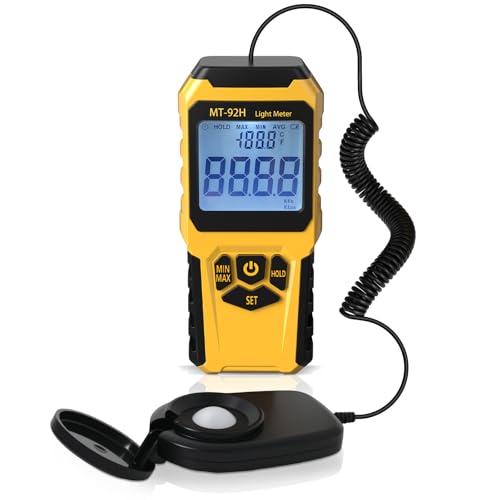
View on Amazon (Dr.meter Digital Illuminance Light Meter 0-200,000 Lux Range Lux Meter | Lighting Intensity Brightness Measurement for Indoor Outdoor Plants, High Precision Fast Response Light Meters)URCERI MT-92H Light Meter with Split Sensor Lux/Foot Candles Meter 500ms Refresh Rates Range up to 200,000 Lux Switchable Backlight Temperature Measurer 14℉-140℉
$28.50
View on Amazon (URCERI MT-92H Light Meter with Split Sensor Lux/Foot Candles Meter 500ms Refresh Rates Range up to 200,000 Lux Switchable Backlight Temperature Measurer 14℉-140℉)LBW Grow Lights for Indoor Plants, 75" Tall Full Spectrum Plant Grow Light | 228 LEDs Full Spectrum Grow Light with Stand, 6/8/12/16H Timer, 3 Color Modes, 360°Flexible Gooseneck, 4 Heads, Black
$40.99$32.79
View on Amazon (LBW Grow Lights for Indoor Plants, 75" Tall Full Spectrum Plant Grow Light | 228 LEDs Full Spectrum Grow Light with Stand, 6/8/12/16H Timer, 3 Color Modes, 360°Flexible Gooseneck, 4 Heads, Black)





Prices and availability were accurate when retrieved from Amazon and may change. Retrieved Nov 26, 2026.
What extension services say about grow lights
We found three points in extension pages that matter more than brand. First, color: University of Illinois Extension says plants need blue and red wavelengths for photosynthesis, and, for flowering, infrared light as well. Second, hours: it says that in low light a duration of 14 to 16 hours is sufficient and that plants should not get more than 16 hours of light, since they need a rest period, and that day length can also affect flowering plants, as it does for poinsettia, kalanchoe and Christmas cactus. Third, measuring: UF/IFAS says our eyes are poor light meters, and that a digital meter reading foot-candles or lux is enough to tell what a spot gives. (University of Illinois Extension: Houseplant Lighting (light quality and duration), UF/IFAS, Maryland)
Decide where the light will go
A single large plant on the floor calls for a different light from a shelf of small plants. Measure the shelf: GE's fixture is 48.2 inches wide, and Spider Farmer's bars are 23 inches each and light 28 by 14 inches with two bars per tier, according to the makers.
Check what the plant needs
Plants labeled low light need less than a flowering plant. Our low light guide shows the foot-candle bands: about 25 to 100 for low light, 100 to 500 for medium and 500 to 1,000 for bright, according to the University of Maryland and UF/IFAS.
Compare the figures the maker gives for plants
PPF, PPFD and PPE are plant measures. A PPFD that the maker states at a distance, as SANSI does at 20 cm, tells you how close to place the light.
Set the hours
Use a plug-in timer so the light runs for the same hours each day, within the 14 to 16 hours Illinois Extension gives. Day-length bloomers are the exception: poinsettia, kalanchoe and Christmas cactus need long nights, so keep a grow light off in the dark period.
Measure before and after
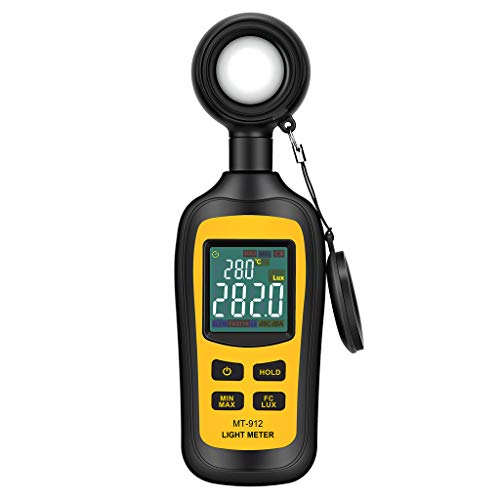
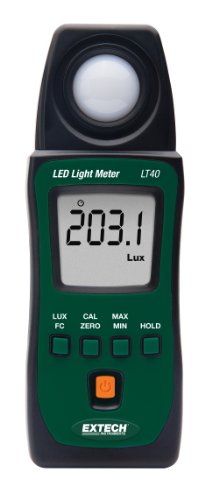
A light meter that reads foot-candles or lux, as UF/IFAS suggests, shows whether the light has changed the spot. Do not rely on how bright it looks to you.
| Band | Foot-candles | Source |
|---|---|---|
| Low light | About 25 to 100 | (Maryland, UF/IFAS) |
| Medium light | About 100 to 500 | (Maryland, UF/IFAS) |
| Bright light | About 500 to 1,000 | (Maryland, UF/IFAS) |
| Direct sun | Over 1,000 | (Maryland, UF/IFAS) |
When a grow light is not the answer
A grow light is for a room that is too dim, or for seedlings and cuttings that need extra light. If a plant is struggling in a bright room, the cause can be water, drainage or pot size instead. The houseplants hub has a picker that matches plants to the light you have, and the potting soil guide and the repotting guide cover the other common causes. University of Maryland Extension also says not to rely on windowsill light alone when starting seeds indoors: supplemental light keeps seedlings sturdy-stemmed. (University of Maryland Extension: January Gardening Tips and Tasks)
Sources: SANSI: T10 Pro 55W LED Standing Grow Light (checked 2026-11-26); GE Lighting: Grow Light for Seeds and Greens, 48 in (52 PPF) (checked 2026-11-26); Spider Farmer: GlowBar 2FT Full Spectrum LED Grow Light Strips (4 pack) (checked 2026-11-26); University of Illinois Extension: Houseplant Lighting (light quality and duration) (checked 2026-11-26); UF/IFAS Gardening Solutions: Light for Houseplants (checked 2026-11-25); University of Maryland Extension: Lighting for Indoor Plants (checked 2026-11-25); University of Maryland Extension: January Gardening Tips and Tasks (checked 2026-11-26).
Questions
How many hours a day should a grow light be on?
University of Illinois Extension says 14 to 16 hours is sufficient in low light and that plants should not get more than 16 hours. Day-length bloomers need long nights, so keep the light off in their dark period.
Do I need a full spectrum grow light?
Illinois Extension says plants need blue and red wavelengths for photosynthesis and infrared for flowering. A maker's 'full spectrum' is a description, so compare the figures it gives, not the word.
Are lumens a good way to compare grow lights?
Lumens measure how bright light looks to people. For plants, makers give PPF, PPFD or PPE. Compare lights only on figures both makers give.
How close should a grow light be to my plant?
Follow the maker's instructions. SANSI states a PPFD at 20 cm, which gives a reference distance. We do not set a distance for other lights.
Can a grow light replace a window?
It can supplement or replace one in a dim room. University of Maryland Extension says not to rely only on windowsill light for seedlings and to add grow lights.