Plants That Attract Hummingbirds, by Region and Bloom Season
On this page
What hummingbirds look for in a flower
Hummingbirds feed on the nectar of tubular flowers with their long bills, and extension sources agree on the same few traits. UF/IFAS says to choose plants with brightly colored tubular flowers, and that hummingbirds prefer red, orange and pink. University of Illinois Extension adds that they will visit other colors too: black and blue salvia is a favorite although it is purple. The UC Master Gardeners of San Mateo and San Francisco counties say red tubular flowers are especially attractive because shape and color signal rich nectar, while red flowers that are not tubular, such as roses and geraniums, offer little nectar so the birds leave quickly. (UF/IFAS Gardening Solutions: Hummingbird Gardens, Illinois Extension: Gardening for a hummingbird's travels, UC Master Gardeners of San Mateo and San Francisco Counties: Creating Hummingbird Gardens)
Illinois Extension also warns that double flowers and some cultivars do not produce valuable nectar, so a named showy variety can be worse for hummingbirds than the plain species. Plant species in clumps of at least three so hummingbirds recognize the block of color. (Illinois Extension: Gardening for a hummingbird's travels)
Gear to look at
As an Amazon Associate, Aberdeen Florist earns from qualifying purchases. Disclosure
Handy gear on Amazon
SponsoredAs an Amazon Associate, Aberdeen Florist earns from qualifying purchases. See our affiliate disclosure.
Dr. Brown's Bottle Brush, Blue, 1-Pack | Sponge and bristle cleaning brush, thoroughly clean bottles and baby items, nipple cleaner and suction cup base
$5.99
View on Amazon (Dr. Brown's Bottle Brush, Blue, 1-Pack | Sponge and bristle cleaning brush, thoroughly clean bottles and baby items, nipple cleaner and suction cup base)Smart Hummingbird Feeder with Camera, Red | AI Identification, 4K UHD Camera, Night Vision, Solar Powered Outdoor, IP66 Weatherproof, Garden Decor, Gift
$129.99$94.98
View on Amazon (Smart Hummingbird Feeder with Camera, Red | AI Identification, 4K UHD Camera, Night Vision, Solar Powered Outdoor, IP66 Weatherproof, Garden Decor, Gift)WOSIBO Hummingbird Feeder for Outdoors Patio Large 32 Ounces Colorful Hand Blown Glass Hummingbird Feeder with Ant Moat Hanging Hook, Rope, Brush and Service Card (RED-Firework)
$26.99$22.94
View on Amazon (WOSIBO Hummingbird Feeder for Outdoors Patio Large 32 Ounces Colorful Hand Blown Glass Hummingbird Feeder with Ant Moat Hanging Hook, Rope, Brush and Service Card (RED-Firework))Tegarbed Hand Blown Glass Hummingbird Feeders for Outdoors Hanging, 24oz Wild Bird Nectar Feeder with Ant Moat and Perch, Bee-Resistant Ports, Garden Decor, Gifts for Women Mom, 1 Pack, Blue Phoenix
$27.99$18.99
View on Amazon (Tegarbed Hand Blown Glass Hummingbird Feeders for Outdoors Hanging, 24oz Wild Bird Nectar Feeder with Ant Moat and Perch, Bee-Resistant Ports, Garden Decor, Gifts for Women Mom, 1 Pack, Blue Phoenix)Kaytee Hummingbird ElectroNectar Wild Bird Food, Ready to Use, 64 Ounces | Hydration for hummingbirds. Humming bird food liquid for feeders. Clear, with electrolytes, nectar for hummingbird feeder
$9.99
View on Amazon (Kaytee Hummingbird ElectroNectar Wild Bird Food, Ready to Use, 64 Ounces | Hydration for hummingbirds. Humming bird food liquid for feeders. Clear, with electrolytes, nectar for hummingbird feeder)FEED GARDEN Glass Hummingbird Feeder for Outdoors Hanging, 16 OZ Humming Birds Feeders with 4 Bee Guard Feeding Ports & Built-in Ant Moat, Bird Feeder for Outside, Gifts for Women Mom, Red
$17.99$14.99
View on Amazon (FEED GARDEN Glass Hummingbird Feeder for Outdoors Hanging, 16 OZ Humming Birds Feeders with 4 Bee Guard Feeding Ports & Built-in Ant Moat, Bird Feeder for Outside, Gifts for Women Mom, Red)TOP XIAN Hummingbird Feeders for Outdoors 2 Pack 14Oz Plastic Ant&Bee Proof | Leak-proof Nectar Feeder with Ant Moat, 4 Bee Guard Feeding Ports&Perches, Rustproof Base, Garden Yard Décor Gifts for Women
$14.99$12.74
View on Amazon (TOP XIAN Hummingbird Feeders for Outdoors 2 Pack 14Oz Plastic Ant&Bee Proof | Leak-proof Nectar Feeder with Ant Moat, 4 Bee Guard Feeding Ports&Perches, Rustproof Base, Garden Yard Décor Gifts for Women)Sweet Yards Wildflower Seeds Butterfly and Hummingbird Mix - 7,500+ Seeds, Large 1 Ounce Packet - 23 Open Pollinated Annual and Perennial Species for Vibrant Blooms - Ideal for Planting in Spring
$12.99
View on Amazon (Sweet Yards Wildflower Seeds Butterfly and Hummingbird Mix - 7,500+ Seeds, Large 1 Ounce Packet - 23 Open Pollinated Annual and Perennial Species for Vibrant Blooms - Ideal for Planting in Spring)


Prices and availability were accurate when retrieved from Amazon and may change. Retrieved Nov 26, 2026.
Hummingbird plants by region and bloom season
Regions matter because a plant that grows well and blooms in spring in one place may not survive another. The table below holds plants from five regional extension and Audubon sources, with the bloom time as each source words it and whether the source calls the plant native. 32 of the 42 rows are marked native by their source. Bloom is given as seasons or phrases, not calendar months, because that is how the sources give it, and months shift by a month or more between a warm and a cold zone.
Matching plants
42 plants
Choose a region and a season to see what blooms when. The full list is in the table below.
| Plant | Region of the source | Native? | Bloom, as the source gives it | Note and source |
|---|---|---|---|---|
| Firebush Hamelia patens | Southeast (Florida source) | Native (per source) | Blooms throughout much of the year | Zones 9 to 11; orange-red tubular flowers (UF/IFAS Gardening Solutions: Hummingbird Gardens) |
| Coral honeysuckle Lonicera sempervirens | Southeast (Florida source) | Native (per source) | Spring through summer | Zones 4 to 10; a vine (UF/IFAS Gardening Solutions: Hummingbird Gardens) |
| Red buckeye Aesculus pavia | Southeast (Florida source) | Native (per source) | Spring | Zones 6a to 9a; UF/IFAS says all parts are poisonous if eaten (UF/IFAS Gardening Solutions: Hummingbird Gardens) |
| Coral bean Erythrina herbacea | Southeast (Florida source) | Native (per source) | Early spring, sometimes fall | Zones 8 to 11; UF/IFAS says the seeds are poisonous, so keep them from children (UF/IFAS Gardening Solutions: Hummingbird Gardens) |
| Scarlet hibiscus Hibiscus coccineus | Southeast (Florida source) | Native (per source) | Mid to late summer | Zones 8 to 10; likes moist soil (UF/IFAS Gardening Solutions: Hummingbird Gardens) |
| Scarlet sage Salvia coccinea | Southeast (Florida source) | Native (per source) | Spring, summer and fall | Zones 7 to 11; blooms less in part shade (UF/IFAS Gardening Solutions: Hummingbird Gardens) |
| Wild columbine Aquilegia canadensis | Midwest (Illinois sources) | Native (per source) | Late spring to early summer | Named by Illinois Extension as a preferred native (Illinois Extension: Pollinator plants for the garden (handout)) |
| Prairie blazing star Liatris pycnostachya | Midwest (Illinois sources) | Native (per source) | Mid to late summer | Illinois Extension says hummingbirds have been seen visiting it (Illinois Extension: Pollinator plants for the garden (handout)) |
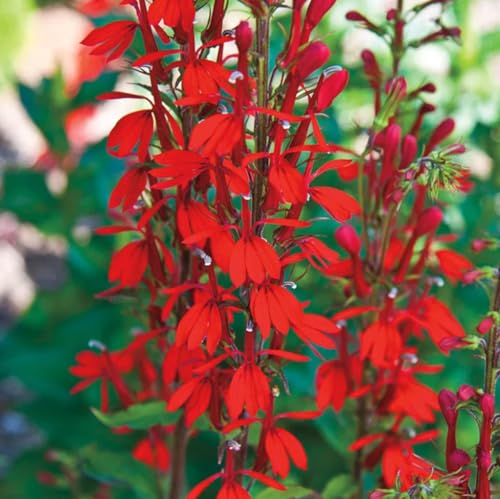
| Cardinal flower Lobelia cardinalis | Midwest (Illinois sources) | Native (per source) | Late summer to early fall | Named by Illinois Extension as a preferred native; likes moist soil (Illinois Extension: Pollinator plants for the garden (handout)) |
| Penstemon (beardtongue) Penstemon species | Mountain West (Colorado, Utah, Wyoming) | Native (per source) | Typically early season; some bloom or rebloom in late summer | Audubon Rockies: nectar-packed tube flowers, full sun (Audubon Rockies: Nine Native Plants to Attract Hummingbirds in Colorado, Utah, and Wyoming) |
| Coral bells Heuchera species | Mountain West (Colorado, Utah, Wyoming) | Native (per source) | Late spring to early summer | Audubon Rockies: shade-loving; look for Sandia coral bells (Audubon Rockies: Nine Native Plants to Attract Hummingbirds in Colorado, Utah, and Wyoming) |
| Golden columbine Aquilegia chrysantha | Mountain West (Colorado, Utah, Wyoming) | Native (per source) | Late spring to early summer | Audubon Rockies: tough, drought tolerant at lower elevations (Audubon Rockies: Nine Native Plants to Attract Hummingbirds in Colorado, Utah, and Wyoming) |
| Wild bergamot (beebalm) Monarda fistulosa | Mountain West (Colorado, Utah, Wyoming) | Native (per source) | Mid-summer | Audubon Rockies: tolerates drought, clay and light shade (Audubon Rockies: Nine Native Plants to Attract Hummingbirds in Colorado, Utah, and Wyoming) |
| Red birds in a tree Scrophularia macrantha | Mountain West (Colorado, Utah, Wyoming) | Native (per source) | Mid-summer | Audubon Rockies: Southwestern wildflower related to penstemons (Audubon Rockies: Nine Native Plants to Attract Hummingbirds in Colorado, Utah, and Wyoming) |
| Red yucca Hesperaloe parviflora | Mountain West (Colorado, Utah, Wyoming) | Native (per source) | Mid-summer | Audubon Rockies: for hot, dry, well-drained spots (Audubon Rockies: Nine Native Plants to Attract Hummingbirds in Colorado, Utah, and Wyoming) |
| Hummingbird trumpet Epilobium canum subsp. garrettii | Mountain West (Colorado, Utah, Wyoming) | Native (per source) | Late summer to early fall | Audubon Rockies: fast-spreading groundcover, full sun (Audubon Rockies: Nine Native Plants to Attract Hummingbirds in Colorado, Utah, and Wyoming) |
| Western hyssop (hummingbird mint) Agastache rupestris, A. cana | Mountain West (Colorado, Utah, Wyoming) | Native (per source) | Late summer to early fall | Audubon Rockies: late nectar for migrating hummingbirds (Audubon Rockies: Nine Native Plants to Attract Hummingbirds in Colorado, Utah, and Wyoming) |
| Western salvia Salvia greggii, S. darcyi | Mountain West (Colorado, Utah, Wyoming) | Native (per source) | Late summer to early fall | Audubon Rockies: long-blooming, hot lower-elevation gardens (Audubon Rockies: Nine Native Plants to Attract Hummingbirds in Colorado, Utah, and Wyoming) |
| Manzanita | California | Native (per source) | Winter | UC Master Gardeners winter list (UC Master Gardeners of San Mateo and San Francisco Counties: Creating Hummingbird Gardens) |
| Chaparral currant | California | Native (per source) | Winter | UC Master Gardeners winter list (UC Master Gardeners of San Mateo and San Francisco Counties: Creating Hummingbird Gardens) |
| Fuchsia-flowered gooseberry | California | Native (per source) | Winter | UC Master Gardeners winter list (UC Master Gardeners of San Mateo and San Francisco Counties: Creating Hummingbird Gardens) |
| Pink-flowering currant | California | Native (per source) | Spring | UC Master Gardeners spring list (UC Master Gardeners of San Mateo and San Francisco Counties: Creating Hummingbird Gardens) |
| Black sage | California | Native (per source) | Spring | UC Master Gardeners spring list (UC Master Gardeners of San Mateo and San Francisco Counties: Creating Hummingbird Gardens) |
| Monkeyflower | California | Native (per source) | Spring | UC Master Gardeners spring list (UC Master Gardeners of San Mateo and San Francisco Counties: Creating Hummingbird Gardens) |
| Hummingbird sage | California | Native (per source) | Spring | UC Master Gardeners spring list (UC Master Gardeners of San Mateo and San Francisco Counties: Creating Hummingbird Gardens) |
| Scarlet monkeyflower | California | Native (per source) | Summer | UC Master Gardeners summer list (UC Master Gardeners of San Mateo and San Francisco Counties: Creating Hummingbird Gardens) |
| California fuchsia | California | Native (per source) | Summer | UC Master Gardeners summer list (UC Master Gardeners of San Mateo and San Francisco Counties: Creating Hummingbird Gardens) |
| Aster | California | Native (per source) | Fall | UC Master Gardeners fall list (UC Master Gardeners of San Mateo and San Francisco Counties: Creating Hummingbird Gardens) |
| Obedient plant Physostegia virginiana | Northeast (Connecticut source) | Not stated | Early June through September | UConn: drought tolerant perennial, about 3 feet tall (UConn Home and Garden Education Center: Favorite Summer Plants for Hummingbirds) |
| Hyssop Agastache species | Northeast (Connecticut source) | Not stated | Long bloom, some starting in late spring | UConn: deadheading prolongs bloom (UConn Home and Garden Education Center: Favorite Summer Plants for Hummingbirds) |
| Swamp milkweed Asclepias incarnata | Northeast (Connecticut source) | Native (per source) | Not stated | UConn: visited by hummingbirds; likes moister soil (UConn Home and Garden Education Center: Favorite Summer Plants for Hummingbirds) |
| Penstemon centranthifolius | California | Native (per source) | Late spring | UC Master Gardeners late-spring list (UC Master Gardeners of San Mateo and San Francisco Counties: Creating Hummingbird Gardens) |
| Red flowering currant | California | Native (per source) | Summer | UC Master Gardeners summer list (UC Master Gardeners of San Mateo and San Francisco Counties: Creating Hummingbird Gardens) |
| Channel Island snapdragon | California | Native (per source) | Summer | UC Master Gardeners summer list (UC Master Gardeners of San Mateo and San Francisco Counties: Creating Hummingbird Gardens) |
| Tobacco plant (non-native) | California | Non-native (per source) | Winter | UC Master Gardeners list of non-native plants (UC Master Gardeners of San Mateo and San Francisco Counties: Creating Hummingbird Gardens) |
| Grevillea (non-native) | California | Non-native (per source) | Winter | UC Master Gardeners list of non-native plants (UC Master Gardeners of San Mateo and San Francisco Counties: Creating Hummingbird Gardens) |
| Australian fuchsia (non-native) | California | Non-native (per source) | Winter | UC Master Gardeners list of non-native plants (UC Master Gardeners of San Mateo and San Francisco Counties: Creating Hummingbird Gardens) |
| Salvias (non-native) | California | Non-native (per source) | Spring, summer and fall | UC Master Gardeners list of non-native plants (UC Master Gardeners of San Mateo and San Francisco Counties: Creating Hummingbird Gardens) |
| Agastache (non-native) | California | Non-native (per source) | Spring and summer | UC Master Gardeners list of non-native plants (UC Master Gardeners of San Mateo and San Francisco Counties: Creating Hummingbird Gardens) |
| Penstemons (non-native) | California | Non-native (per source) | Spring and summer | UC Master Gardeners list of non-native plants (UC Master Gardeners of San Mateo and San Francisco Counties: Creating Hummingbird Gardens) |
| Zinnia (non-native) | California | Non-native (per source) | Spring and summer | UC Master Gardeners list of non-native plants (UC Master Gardeners of San Mateo and San Francisco Counties: Creating Hummingbird Gardens) |
| Thyme-leaf fuchsia (non-native) | California | Non-native (per source) | Spring and summer | UC Master Gardeners list of non-native plants (UC Master Gardeners of San Mateo and San Francisco Counties: Creating Hummingbird Gardens) |
Plan for a long bloom
A garden with one big flush of flowers feeds hummingbirds for a few weeks. The sources recommend spreading bloom across the season: UF/IFAS notes that nesting season runs from spring through summer and that hummingbirds need a lot of nectar then, so you want a wide selection in bloom. Audubon Rockies groups its nine natives into late spring to early summer, mid-summer and late summer to early fall bloomers, and says western hyssops offer a late-season nectar source for migrating hummingbirds after many plants have stopped. (UF/IFAS Gardening Solutions: Hummingbird Gardens, Audubon Rockies: Nine Native Plants to Attract Hummingbirds in Colorado, Utah, and Wyoming)
Pick one plant for each stretch
Choose at least one plant from each bloom group in your region: early (spring), middle (summer) and late (late summer and fall). In the Mountain West list, penstemon covers early, wild bergamot mid-summer and hummingbird trumpet late.
Plant in clumps
Illinois Extension says to plant species in clumps of at least three so hummingbirds recognize the block of color. (Illinois Extension: Gardening for a hummingbird's travels)
Add vertical space
Illinois says growing plants vertically, including vines, maximizes space and that a container of preferred plants will invite them to a patio or balcony. (Illinois Extension: Gardening for a hummingbird's travels)
Deadhead to extend bloom
UConn says deadheading prolongs bloom time for hyssops and rebloom for swamp milkweed and butterfly weed. (UConn Home and Garden Education Center: Favorite Summer Plants for Hummingbirds)
Skip insecticides and systemic herbicides
Illinois says hummingbirds also eat insects, so avoid insecticides, and says not to use systemic herbicides because they are persistent in flowers. (Illinois Extension: Gardening for a hummingbird's travels)
Handy gear on Amazon
SponsoredAs an Amazon Associate, Aberdeen Florist earns from qualifying purchases. See our affiliate disclosure.
Dr. Brown's Soft Touch Baby Bottle Cleaning Brush, Gray, 1-Pack | Bottle Brush with Nipple Cleaner + Suction Cup Base for Easy Storage, BPA-Free
$5.99$4.98
View on Amazon (Dr. Brown's Soft Touch Baby Bottle Cleaning Brush, Gray, 1-Pack | Bottle Brush with Nipple Cleaner + Suction Cup Base for Easy Storage, BPA-Free)Humbirdy 4K Hummingbird Feeder with Camera,No Subscription,Solar Powered | 4K Ultra HD Video at 30fps,10x Slow-Motion at 120fps, 1.9in Closer Focus,Leak Proof, Ant Moat,2.4G&5G Wi-Fi,Bird Lover Gift
$179.00$149.00
View on Amazon (Humbirdy 4K Hummingbird Feeder with Camera,No Subscription,Solar Powered | 4K Ultra HD Video at 30fps,10x Slow-Motion at 120fps, 1.9in Closer Focus,Leak Proof, Ant Moat,2.4G&5G Wi-Fi,Bird Lover Gift)Real Glass Ant Moat for Hummingbird Feeders & Oriole Feeders Glass Tulip Shape Insect Guard with Large Capacity Flower Design Nectar Feeder Accessory Hooks (Red, 2 Pack)
$16.90
View on Amazon (Real Glass Ant Moat for Hummingbird Feeders & Oriole Feeders Glass Tulip Shape Insect Guard with Large Capacity Flower Design Nectar Feeder Accessory Hooks (Red, 2 Pack))FryOilSaver Co. B129C Hummingbird Feeder Cleaning Brush, 14in | Dual-Purpose Head Cleans Long Bottles & Tubes, Bristles Clean Up in the Dishwasher, Removes Nectar Residue
$16.90
View on Amazon (FryOilSaver Co. B129C Hummingbird Feeder Cleaning Brush, 14in | Dual-Purpose Head Cleans Long Bottles & Tubes, Bristles Clean Up in the Dishwasher, Removes Nectar Residue)Grevosea Hummingbird Feeder Cleaning Brush, 19 Pcs 3 Sizes Bendable Tube Brushes, Double Headed 2 in 1 Nylon Mini Clean Kit for Hard to Reach Places Tiny Crevice Straw Cleaner
$7.29
View on Amazon (Grevosea Hummingbird Feeder Cleaning Brush, 19 Pcs 3 Sizes Bendable Tube Brushes, Double Headed 2 in 1 Nylon Mini Clean Kit for Hard to Reach Places Tiny Crevice Straw Cleaner)TERULF Ant Moat for Hummingbird & Oriole Feeders, 5 OZ x 2 Pack | 3.94 inch / 100 mm Diameter Red Umbrella Hanger Ant Guard with Large Capacity and Hooks
$7.99
View on Amazon (TERULF Ant Moat for Hummingbird & Oriole Feeders, 5 OZ x 2 Pack | 3.94 inch / 100 mm Diameter Red Umbrella Hanger Ant Guard with Large Capacity and Hooks)


Prices and availability were accurate when retrieved from Amazon and may change. Retrieved Nov 26, 2026.
Natives and non-natives
Several sources recommend natives. UC Master Gardeners call the ultimate hummingbird garden one full of native plants chosen for the site's growing conditions and designed for year-round blooms, and they also list non-native plants that hummingbirds use, such as grevillea, salvias and zinnia, which we mark non-native in the table. Illinois Extension names native plants hummingbirds prefer, such as red columbine, cardinal flower, trumpet honeysuckle and bee balm, and preferred annuals such as canna and cigar plant. Where a source did not say whether a plant is native, the table says "not stated" rather than guess. (UC Master Gardeners of San Mateo and San Francisco Counties: Creating Hummingbird Gardens, Illinois Extension: Gardening for a hummingbird's travels)
"Native" depends on where you are. The Midwest rows name wild columbine (Aquilegia canadensis) and the Mountain West rows name golden columbine (Aquilegia chrysantha), a different species. Use the region column as a guide and check your state's native plant society or extension office before buying.
Handy gear on Amazon
SponsoredAs an Amazon Associate, Aberdeen Florist earns from qualifying purchases. See our affiliate disclosure.
Pawfly 18 Pcs Hummingbird Feeder Cleaning Brushes, Mini Nylon Hummingbird Feeder Brushes for Cleaning, Tiny Brushes for Cleaning Small Parts, Small Cleaner Brushes, Hummingbird Feeder Parts, 3 Colors
$4.99
View on Amazon (Pawfly 18 Pcs Hummingbird Feeder Cleaning Brushes, Mini Nylon Hummingbird Feeder Brushes for Cleaning, Tiny Brushes for Cleaning Small Parts, Small Cleaner Brushes, Hummingbird Feeder Parts, 3 Colors)Hummingbird Feeder with Camera, 2K Live View, Glass Reservoir, Solar Panel | For parents and bird lovers; app-connected backyard viewing with 2.4GHz WiFi, motion alerts, local storage and family sharing
$69.99$47.49
View on Amazon (Hummingbird Feeder with Camera, 2K Live View, Glass Reservoir, Solar Panel | For parents and bird lovers; app-connected backyard viewing with 2.4GHz WiFi, motion alerts, local storage and family sharing)BBB Seed Hummingbird Flower Seeds Mix, Non-GMO Wildflowers, 1 oz Packet | Hummingbird flower seeds, wildflower seeds, and perennial blooms create colorful hummingbird flowers for pollinator gardens.
$9.99
View on Amazon (BBB Seed Hummingbird Flower Seeds Mix, Non-GMO Wildflowers, 1 oz Packet | Hummingbird flower seeds, wildflower seeds, and perennial blooms create colorful hummingbird flowers for pollinator gardens.)Large Capacity Metal Ant Moat for Hummingbird Feeders (4 Pack) | Heavy Duty Reservoir Ant Guard, Leak-Proof & Rust-Resistant Hooks, Includes 4 Cleaning Brushes, Vibrant Red Garden Décor
$12.99$9.49
View on Amazon (Large Capacity Metal Ant Moat for Hummingbird Feeders (4 Pack) | Heavy Duty Reservoir Ant Guard, Leak-Proof & Rust-Resistant Hooks, Includes 4 Cleaning Brushes, Vibrant Red Garden Décor)KINGSEM 12 PCS Straw Cleaner Brush kit with 2mm-25mm /6.5-10 INCH for Tube and Pipe.Tumbler, Sippy Cup, Bottle with Straw,Hummingbird feeders and Drinking Straw, Brushes for Cleaning Tanks
$9.59$7.19
View on Amazon (KINGSEM 12 PCS Straw Cleaner Brush kit with 2mm-25mm /6.5-10 INCH for Tube and Pipe.Tumbler, Sippy Cup, Bottle with Straw,Hummingbird feeders and Drinking Straw, Brushes for Cleaning Tanks)Bottle Cleaning Brush Set - Long Handle Bottle Cleaner for Washing Narrow Neck Beer Bottles, Sports Water Bottles with Straw Brush, Kettle Spout/Lid Cleaner Brushes
$8.99$7.99
View on Amazon (Bottle Cleaning Brush Set - Long Handle Bottle Cleaner for Washing Narrow Neck Beer Bottles, Sports Water Bottles with Straw Brush, Kettle Spout/Lid Cleaner Brushes)Groundio 25,000+ Wildflower Seeds Mix 1 Oz, 24 Varieties Perennial & Annual Seeds for Hummingbirds and Butterflies, High Germination Flower Seeds Throw and Grow to Plant Outside, No Filler
$8.79
View on Amazon (Groundio 25,000+ Wildflower Seeds Mix 1 Oz, 24 Varieties Perennial & Annual Seeds for Hummingbirds and Butterflies, High Germination Flower Seeds Throw and Grow to Plant Outside, No Filler)



Prices and availability were accurate when retrieved from Amazon and may change. Retrieved Nov 26, 2026.
A feeder as a supplement
Illinois Extension says that when blooms are scarce, hummingbird feeders work well as supplemental food. The recipe is the same in every source we read, and the sources differ only on small points. (Illinois Extension: Gardening for a hummingbird's travels)
| Point | Smithsonian's National Zoo | Penn State Extension | UC Master Gardeners |
|---|---|---|---|
| Ratio | 1 part sugar to 4 parts water | 1 part sugar to 4 parts water | One part refined white sugar to 4 parts water |
| Sugar | Refined white sugar only; never honey, corn syrup or raw sugars | Never honey: fermented honey can cause a fatal fungal disease | White sugar only; no honey, molasses or artificial sweeteners |
| Red dye | Do not add | Unnecessary; the red on the feeder attracts them | Not necessary; natural nectar is clear |
| Boil the water? | No, just stir until dissolved | Boil, pour over sugar, let cool | Bring to a boil, let cool |
| Storage | Extra can be kept in the refrigerator | Extra can be kept in the refrigerator | Refrigerate; warm to room temperature before refilling |
| Cleaning | Change every other day and clean thoroughly each time | Not stated | When empty, wash thoroughly and refill with fresh solution |
The sources differ on whether to boil. The National Zoo says it is not needed, and Penn State and the UC Master Gardeners say to boil and cool. Either way, the shared point is the 1 to 4 ratio and that the nectar must be changed and the feeder cleaned often. Our hummingbird feeder guide compares three feeders by the specs their makers publish.
Where this fits in the garden
If deer visit your garden, check the plants against the deer-resistant plants list: several of the same genera, such as anise hyssop and salvia, are rated A by Rutgers. For soil and mulch, use the mulch calculator. The garden hub has the season planner and links to everything else.
Sources: UF/IFAS Gardening Solutions: Hummingbird Gardens (checked 2026-11-26); Audubon Rockies: Nine Native Plants to Attract Hummingbirds in Colorado, Utah, and Wyoming (checked 2026-11-26); Illinois Extension: Gardening for a hummingbird's travels (checked 2026-11-26); Illinois Extension: Pollinator plants for the garden (handout) (checked 2026-11-26); UC Master Gardeners of San Mateo and San Francisco Counties: Creating Hummingbird Gardens (checked 2026-11-26); UConn Home and Garden Education Center: Favorite Summer Plants for Hummingbirds (checked 2026-11-26); Smithsonian's National Zoo: Hummingbird Nectar Recipe (checked 2026-11-26); Penn State Extension: Hummingbird Feeders (checked 2026-11-26).
Questions
What flowers do hummingbirds like best?
Brightly colored tubular flowers, especially red, orange and pink, according to UF/IFAS. Illinois Extension adds that they also visit other colors, such as purple black and blue salvia.
When should I plant for hummingbirds?
Pick plants that bloom in each season. UF/IFAS says nesting runs spring through summer and needs a wide selection in bloom, and Audubon Rockies says late bloomers feed migrating birds.
What is the right sugar to water ratio for a hummingbird feeder?
1 part plain white sugar to 4 parts water, according to the Smithsonian's National Zoo, Penn State Extension and UC Master Gardeners. Add no red dye and never use honey.
How often should I change hummingbird nectar?
The National Zoo says to change the feeder every other day and to clean it thoroughly each time to prevent harmful mold. A feeder maker, Perky-Pet, says to clean at least every two weeks; we follow the more cautious figure.
Do I need to plant natives?
Natives are recommended by several sources, but they also name non-native plants hummingbirds use. Check your region column and your state's native plant resources.